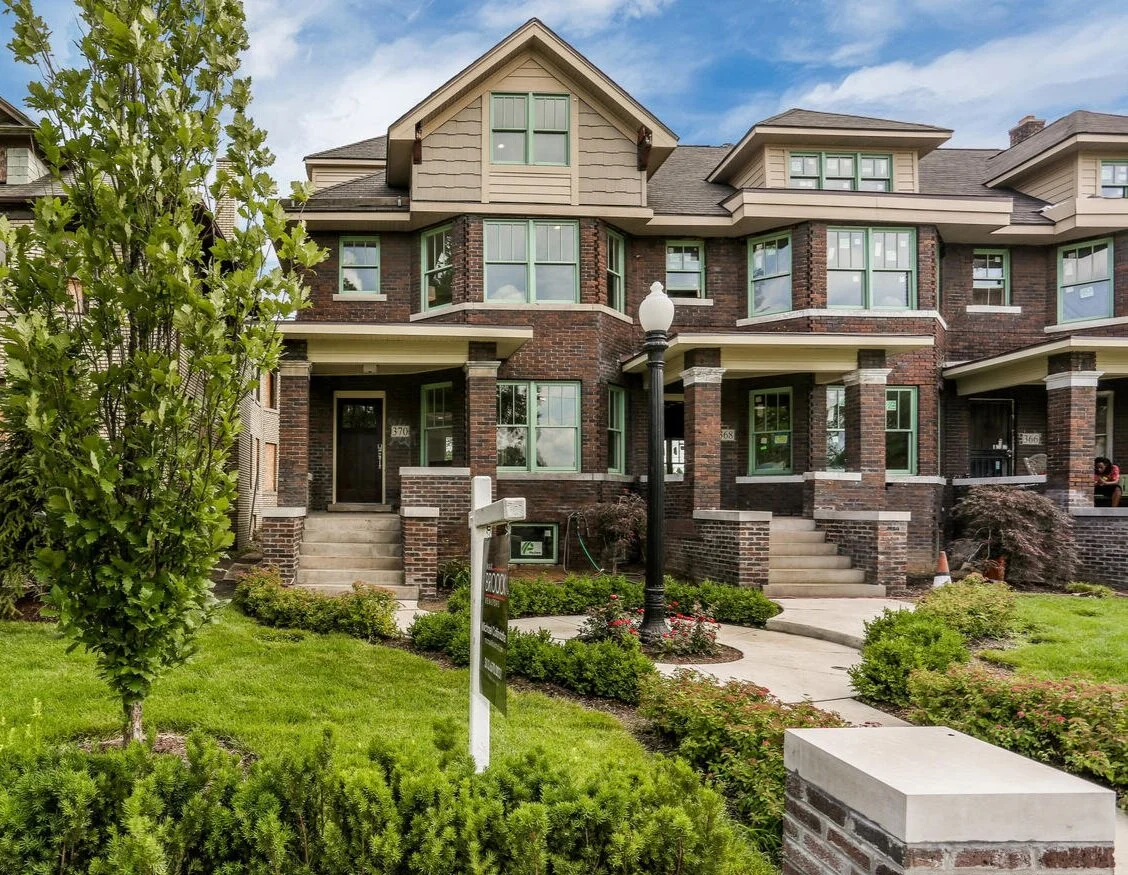
People often ask this question cautiously — as if Detroit is a single experience that can be summarized neatly. It isn’t.
Detroit is textured. It shifts block by block, neighborhood by neighborhood. Living here means understanding rhythm more than reputation.
Spend a morning in Midtown Detroit and you’ll feel walkability, adaptive reuse energy, proximity to cultural anchors, and steady residential reinvestment. Move west toward Corktown and the architecture tightens — historic brick, scaled homes, corner cafes. Head toward the water near Belle Isle and the city opens up entirely. Waterfront access in a major metropolitan area is not common.
But beyond the recognizable districts, much of Detroit’s appeal lives in its residential streets. Deep brick colonials. Tudor Revival homes with slate roofs. Front porches that still function socially. Tree-lined blocks where owner occupancy quietly signals stability.
What surprises many newcomers is the scale. Homes here were built with proportion and permanence in mind. Ceiling heights, masonry thickness, millwork detail — these are not easily replicated in newer construction.
Living in Detroit requires attentiveness. The city rewards those who choose their block intentionally. Two streets can feel entirely different. That is not a flaw. It is a characteristic.
Michael Coffindaffer approaches relocation with this nuance in mind. Through Stylish Turf, he helps buyers think beyond commute times and square footage. He looks at architectural continuity, reinvestment patterns, and the lived experience of a neighborhood at different times of day.
Detroit is not defined by one narrative. It is defined by the quality of your alignment with it.